
Lexington City Directory Shelves
The verified Lexington historical directory holdings are at the South Carolina Reference collection in Lexington Main Library. The catalog establishes distinct runs, publishers, and omissions. It does not establish that every directory published for the area survives locally. That distinction matters when a name is absent. An absence in a cataloged gap is not evidence that the person left Lexington, and an entry in a volume is a date-specific historical lead rather than proof of a present address.
| Collection | Years | Where Held | Access |
|---|---|---|---|
| Cayce-West Columbia-Lexington, Hill Publishing | 1967; 1970–1984 | Lexington Main Library, South Carolina Reference | Physical, noncirculating reference volumes |
| Cayce-West Columbia-Lexington and Irmo, R. L. Polk | 1985–1989 | Lexington Main Library, South Carolina Reference | Physical reference volumes |
| Columbia West Suburban Directory, including Lexington/Lexington County | 1991–1996 | Lexington Main Library, South Carolina Reference | Physical reference volumes |
| Lexington County, South Carolina city directory, R. L. Polk | 1998–2021; 2023–2026 | Lexington Main Library, South Carolina Reference | Physical, noncirculating volumes; 2013–2021 and 2023–2026 generally list volumes 1 and 2 |
| R. L. Polk Cross Reference Directory | 1979–1986; 1988–1994; 1996–2003 | Lexington Main Library reference collection | Check the selected physical year and volume |
Cataloged Lexington directory gaps are 1968–1969, 1990, 1997, and 2022. The official library catalog record is the best way to confirm a requested year before a visit. A separate Cross Reference catalog record expressly names Lexington and Lexington County, but its holdings are also selective.
Lexington Historical Directory Desk
The South Carolina Room is on the ground floor of Lexington Main Library, 5440 Augusta Road, Lexington, SC 29072. Its books, maps, obituary indexes, microfilmed newspapers, census material, historical papers, family histories, military records, and photographs offer the local context that a historical directory year may lack. The holdings are noncirculating, so plan to work with the selected book in the library or ask staff what format covers the date in question. Research help is available at (803) 785-2680 and ask@lexcolibrary.com.
A Lexington Main Library South Carolina Room page documents the local-history holdings shown here.
The room is the practical access channel for the Lexington reference volumes and related microfilm. Published hours on the collection page are Monday through Thursday 8:30–8, Friday and Saturday 8:30–5:30, and Sunday 2–5; confirm hours before going.
The library genealogy guide adds county and church records, family manuscripts, South Carolina federal census reels, cemetery material, deed, equity, and will abstracts, immigration and naturalization material, and military records. Ancestry Library Edition is available inside the library only, while HeritageQuest is available at home with a library card. These companion sources should be requested for a specific surname, address, or time frame, not assumed to contain every Lexington household.
Lexington City Directory Years and Gaps
The cataloged sequence is useful as a timeline, not as a promise of uninterrupted coverage. The earliest verified Town-including title is the 1967 Cayce-West Columbia-Lexington directory. The next local run begins in 1970. Hill Publishing covers the early period, R. L. Polk follows for 1985–1989, the Columbia West Suburban title covers 1991–1996, and the Lexington County R. L. Polk record resumes for 1998–2021 and 2023–2026. No 2022 issue is listed in that core record.
- 1967 and 1970–1984: the catalog lists Cayce-West Columbia-Lexington volumes from Hill Publishing.
- 1985–1989: the catalog shifts to Cayce-West Columbia-Lexington and Irmo volumes from R. L. Polk.
- 1991–1996: the Columbia West Suburban Directory explicitly includes Lexington and Lexington County.
- 1998–2021 and 2023–2026: the Lexington County R. L. Polk directory record identifies volumes, with no cataloged 2022 issue.
For dates outside those runs, ask about newspapers, census schedules, maps, historical papers, or a different cataloged title. The nearby 1911 Columbia City Directory is digitized, but it is a Columbia example only. It is not evidence for a Lexington address and should not be used to fill a local directory gap.
A University of South Carolina digitized directory image illustrates a directory from another locality.
The digitized example is useful for understanding why a volume must be identified by place and year. It cannot be treated as a Lexington source or as proof of a local entry format.
Reading Lexington City Directory Evidence
No Lexington directory volume page was inspected during the research. For that reason, no sample Lexington entry, abbreviation key, owner notation, spouse notation, occupation field, or street-order section is asserted here. Open the exact year first and photograph or transcribe its title page, introductory matter, and any key before interpreting an entry. A directory may identify a person, address, business connection, or other printed detail, but the exact layout must come from that edition rather than from a directory in another city.
| What the Lexington catalog proves | Selected title, publisher, year range, library location, and reference status. |
|---|---|
| What an opened volume may establish | Only the fields visibly printed in that particular edition, read with its own key and introductory pages. |
| What remains unverified | Exact entry order, abbreviations, symbols, whether a reverse section exists, and whether any field appears consistently across the run. |
- Criss-cross directory
- A directory arranged by address or street rather than by name. The Cross Reference title is cataloged for selected Lexington years, but the contents of a chosen volume must be checked in person.
- Householder index
- A name-oriented finding aid that can point to a household listing when an edition includes one. Do not assume it appears in every local volume.
- Abbreviation key
- The edition-specific explanation of printed shorthand. Its meaning must come from the key in the book, not from a different city’s directory.
For a current property or street-level record, use the county’s address tools instead of stretching a historical book beyond its date. The Lexington street address directory follows the modern property-card and deed path.
Lexington City Directory Gaps and Obituaries
The library’s public Obituary Index can help test a surname when a directory year is missing or when a household trail ends. Last Name is required and accepts all or part of a name. First Name or Nickname and Year of Death are optional, and the index also offers browse-by-year. A result can show full name, birth and death dates, age or place, source code, and publication date and page. It is a lead to the newspaper issue, not a substitute for opening the cited notice.
Coverage has a critical break: the Lexington Dispatch-News index spans 1873–2001 except February 24, 1944 through October 4, 1962. A no-result in that interval should lead to a request for the underlying newspaper at Lexington Main, not a claim that there was no notice. The title history also matters because the Dispatch, Lexington News, Dispatch-News, and later Chronicle titles changed over time.
The Lexington obituary index displays the surname and year search route used to locate a newspaper lead.
Use the source code and page from an index result to request or view the matching issue. The exact newspaper title and date determine what a negative search can mean.
Trace Lexington City Directory Households
A household trail is strongest when it moves from a known record to a checked volume and then to an independent historical source. The local property and deed trail can supply a modern address, legal description, owner of record, or sale reference. A chosen Lexington directory year can then be checked for the name or address only after a librarian confirms the relevant book. Released federal census schedules and dated newspaper issues can add a household snapshot for their own dates.
- Write down the surname, spelling variants, address, and approximate year from a deed, property, newspaper, or family record.
- Use the catalog to confirm which Lexington directory title and year are held locally.
- Ask South Carolina Room staff for that reference volume and read its own key before recording what is printed.
- Pair the finding with the nearest released federal census or the library’s microfilmed newspaper material, keeping the dates separate.
- Use the obituary index with surname variants and a narrow year, then inspect the cited issue before drawing a family conclusion.
A name that vanishes can reflect a move, a change in the book’s coverage, a spelling difference, a missing local year, or a different source title. It does not establish why the person disappeared. For a modern name confirmation after an historical lead, the Lexington resident lookup uses custodian records with their own access limits.
Lexington Directories Beside Archives
Historical directories belong beside, not in place of, the State Archives and local library collections. The State Archives guide records 1896–1958 voter-registration books, 1868–1870 taxable real and personal property returns, 1868–1920 tax duplicates, civil journals, and Common Pleas judgment rolls among Lexington County holdings. These are collection leads that require a confirmed access or copy route. They are not an online directory of every historic resident.
The South Carolina Archives Lexington County guide explains the holdings and historical record-loss context.
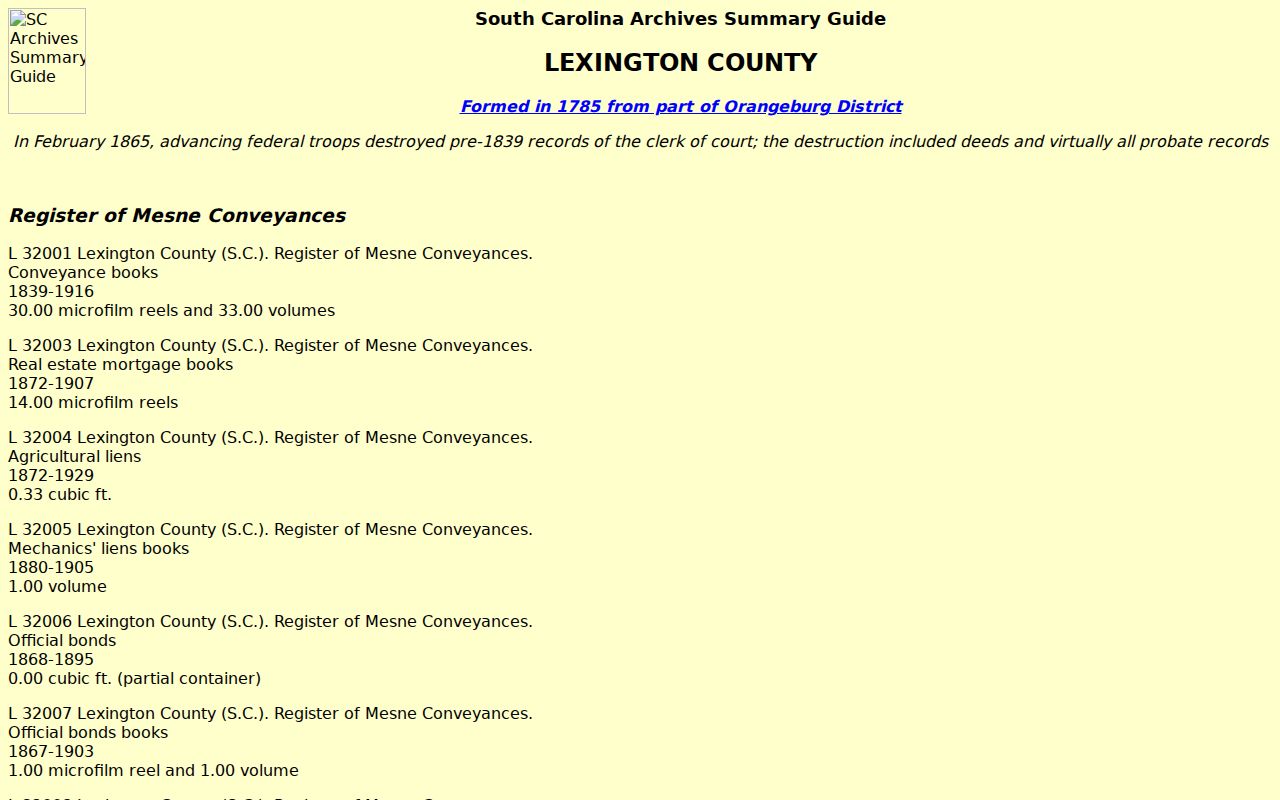
Archive records can test a date or place suggested by a Lexington directory volume, but neither source alone proves a complete personal history. Confirm the exact series, volume, and access conditions with the custodian.
Lexington Historical Context Beyond Directories
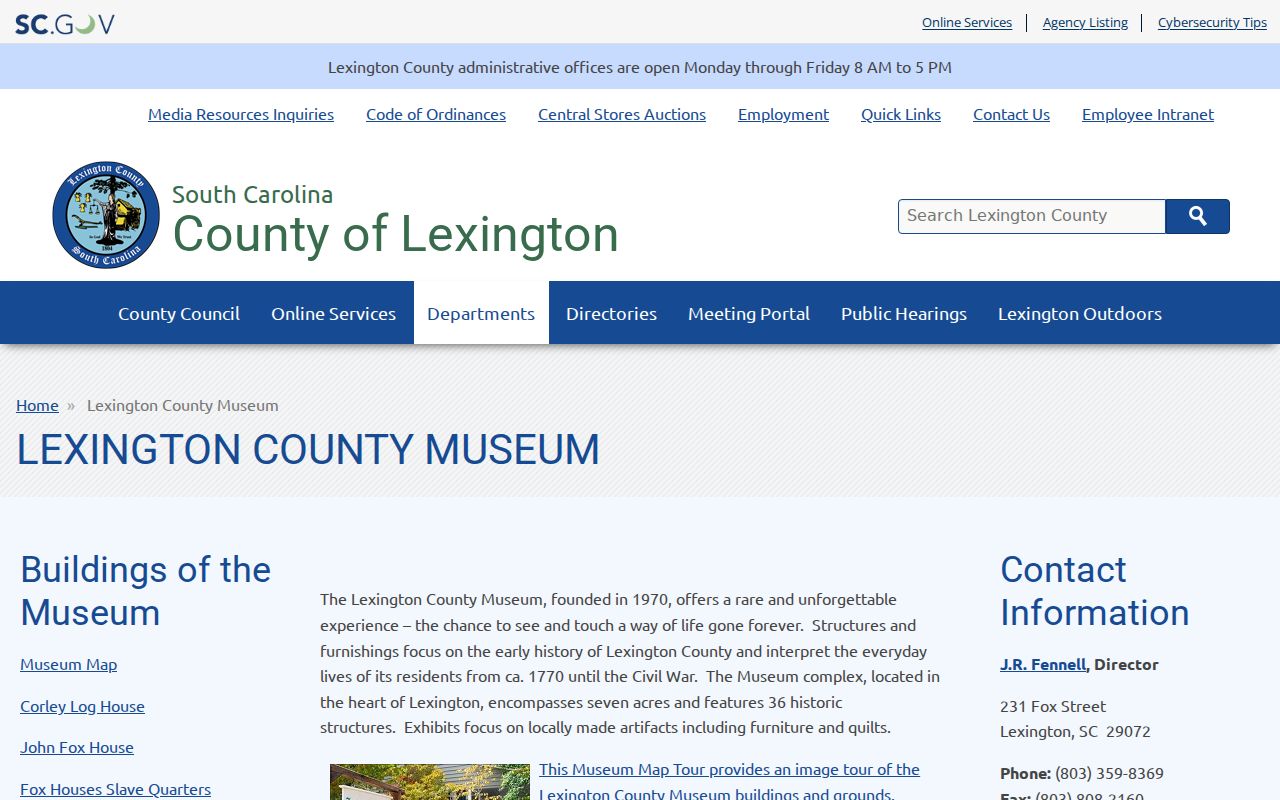
The Lexington County Museum provides place and built-environment context rather than a resident directory. It has 36 historic structures on seven acres and was founded in 1970. Museum staff have described “Researching Historic Homes” material, and its historic-research events can point a visitor toward local sources. A newspaper clipping, museum display, historic survey, or photograph may help frame a property’s story, but it does not verify that a particular person lived at an address.
The Lexington County Museum provides the local historical setting shown in this collection image.
Use museum material as a prompt for a source search, then confirm names, dates, and property links with the library, Register of Deeds, or archives. Note: a historical context source is not proof of a resident or household.